


What if your morning mouthwash is actually disrupting the delicate ecosystem your body works so hard to protect? Many of us have felt that sharp, alcohol-induced sting and wondered if there is a gentler way to achieve a clean smile. It is completely natural to feel confused when weighing the benefits of oil pulling vs mouthwash, especially when you are trying to balance traditional wisdom with modern convenience. You deserve a daily ritual that feels like a nourishing act of self-care rather than a harsh chemical chore.
In this guide, you’ll discover the holistic differences between ancient Ayurvedic oil pulling and modern rinses to help you create a foundational oral care routine that truly works for you. We’ll explore the latest 2026 research on plaque reduction, including a recent study of 63 adults that highlighted how plant-based oils can support gum health, and look at how these practices can coexist for naturally whiter teeth. Whether you’re seeking a toxin-free alternative or a way to enhance your current hygiene, you’ll find a clear, supportive path toward a fresher and more intentional lifestyle.
Key Takeaways
- Deepen your understanding of how traditional rituals and modern rinses differ in their approach to oral detoxification and long-term vitality.
- Evaluate the latest 2026 clinical insights on oil pulling vs mouthwash to determine which method best supports your specific gum health and whitening goals.
- Uncover the science of lipophilic action, a natural process where plant-based oils attract and remove fat-soluble bacteria that water-based rinses might miss.
- Learn to layer your care by starting with a tongue scraper before selecting a specialized oil blend tailored to your body’s daily rhythm.
- Discover how a complete pulling oil kit can simplify your transition to a chemical-free hygiene routine that feels like a rewarding wellness ritual.
Understanding the Approaches: What is Oil Pulling vs. Mouthwash?
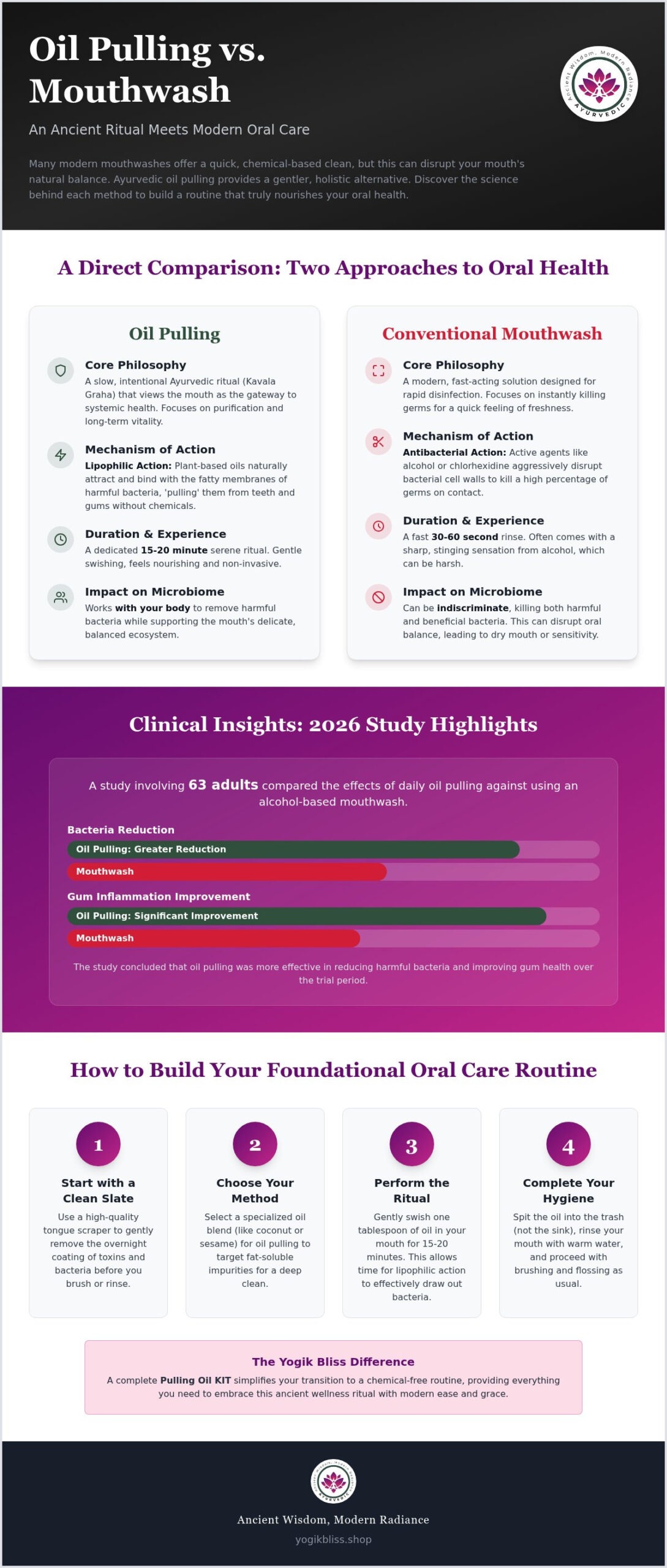
To choose the right path for your morning, you first need to understand the fundamental philosophy behind each swish. In the debate of oil pulling vs mouthwash, we aren’t just comparing liquids; we are comparing two entirely different views of what it means to care for your body. One focuses on rapid disinfection, while the other prioritizes a slow, intentional purification. While mouthwash is designed for a quick 30-second rinse to kill bacteria on contact, oil pulling is a dedicated 20-minute ritual that works with your body’s natural processes.
The Ancient Roots of Oil Pulling
The practice of Oil pulling, known traditionally as Kavala Graha, is far more than a modern trend. It’s a cornerstone of oil pulling Ayurveda that views the mouth as the gateway to your entire system. Historically, practitioners used organic sesame or coconut oils to support gum longevity and draw out fat-soluble impurities. This isn’t a rushed chore. It’s a serene ritual that encourages you to start your day with stillness. By swishing gently, you allow the oil to reach deep into the crevices of your gums, fostering a sense of long-term vitality rather than a temporary fix.
The Modern Evolution of Mouthwash
Mouthwash evolved from therapeutic rinses into the fast-acting, alcohol-based formulas we see on shelves today. These products often rely on active agents like chlorhexidine or high concentrations of alcohol to neutralize bacteria instantly. While they offer a quick burst of freshness, many find the experience overly harsh. The sharp sting can strip the mouth of its natural moisture, leading to sensitivity that feels anything but supportive. Modern mouthwash is built for speed, but that speed can sometimes disrupt the delicate balance of your oral ecosystem.
Choosing between these methods requires looking at your foundational care goals. When weighing oil pulling vs mouthwash, remember that the method of action matters more than the time spent. Rapid rinsing offers immediate surface results, but the lipophilic action of oil pulling works to bind with bacterial membranes for a deeper, organic clean. At Yogik Bliss, we believe the most effective routine begins with a clean slate. Using a Yogik Bliss Tongue Scrapper to remove the overnight coating before you begin either practice ensures you aren’t just moving toxins around, but truly clearing the path for a healthier smile. The Yogik Bliss Pulling Oil KIT acts as a bridge, bringing these ancient traditions into your contemporary lifestyle with ease and grace.
The Science of the Swish: How They Actually Work
Understanding the physics of your oral ritual changes how you feel about every swish. While a liquid rinse might feel effective because it burns, that sensation is actually a chemical reaction rather than a sign of deep cleaning. In the comparison of oil pulling vs mouthwash, the primary difference lies in whether you are sterilizing your mouth or strategically cleansing it. Oil works through a magnetic-like attraction called lipophilic action. Since many harmful bacteria have fatty outer membranes, they’re naturally drawn to the oil as you move it around your teeth and gums.
Saponification and the Cleaning Power of Oil
As you swish for several minutes, the oil undergoes a fascinating physical change. The enzymes in your saliva mix with the fats to create a soap-like emulsification. This process, known as saponification, helps lift stubborn surface stains and debris from the teeth and gum line. High-quality coconut oil is the ideal medium for this because it’s rich in lauric acid. This specific fatty acid supports a healthy oral environment without the need for harsh synthetic agents. It’s a gentle way to encourage gum longevity by physically removing plaque-forming organisms rather than just neutralizing them.
Antibacterial Action in Conventional Rinses
Conventional rinses take a more aggressive path toward daily hygiene. Alcohol-based formulas are designed to disrupt bacterial cell walls almost instantly. While this provides a high percentage of bacteria reduction, it often comes with a “rebound effect.” By stripping away all moisture, these rinses can cause dry mouth or even alter your sense of taste over time. Holistic health isn’t always about “killing 99% of bacteria.” Your mouth needs a balanced microbiome to stay healthy; total sterilization can sometimes disrupt the very bacteria that protect your teeth from decay.
A July 2026 study involving 63 adults found that those who practiced oil pulling demonstrated a greater reduction in bacteria and improvement in gum inflammation compared to those using an alcohol-based mouthwash. This suggests that the mechanical action of pulling might be more supportive for sensitive tissues. If you’re ready to experience a deeper, more organic clean, you might consider starting with the Yogik Bliss Coconut & Mint Oil Pulling Oil to see how gentle effective care can be. By focusing on selective cleaning rather than total sterilization, you build a foundation for a smile that feels as good as it looks.
Oil Pulling vs. Mouthwash: A Direct Comparison
Choosing between these two practices often comes down to your personal values and the specific needs of your smile. When we look at oil pulling vs mouthwash through the lens of recent 2026 data, the differences in performance become clear. Traditional fluoride mouthwash is credited with a 55-70% reduction in plaque, while oil pulling is associated with a 15-30% reduction. While the chemical approach offers a higher percentage of immediate plaque control, the holistic path provides a chemical-free alternative that many find more sustainable for long-term wellness.
The way these methods handle aesthetics also differs significantly. Many modern rinses use chemical bleaching agents to whiten teeth, which can sometimes lead to temporary sensitivity. In contrast, oil pulling focuses on surface stain removal. By gently lifting tannins from coffee or tea through mechanical swishing, it helps reveal your naturally whiter teeth without compromising the enamel. Regarding breath freshness, mouthwash often relies on strong flavors to mask odors. Oil pulling aims to remove the bacterial source of the odor itself, leading to a clean sensation that lasts throughout the day.
Cost is another factor where the two methods are remarkably similar. Market analysis from July 2026 shows that the monthly cost for oil pulling typically ranges between $8 and $15. Traditional mouthwash falls into a similar bracket of $6 to $16. This makes the choice less about your budget and more about the quality of the ingredients you wish to invite into your daily hygiene.
Gum Health and Sensitivity
For those with receding or sensitive gums, the gentleness of oil is often a revelation. Alcohol-based mouthwashes can cause a 35-45% reduction in gum bleeding, but the sharp sting can be painful for sensitive tissues. Using a specialized blend like Yogik Bliss Pulling Oil with Clove Oil provides a soothing effect on minor oral discomfort. Clove has been used for centuries to support gum longevity and comfort, making it a supportive ally for those who find conventional rinses too aggressive.
The Time Factor: Convenience vs. Mindfulness
The most common objection to oil pulling is the 20-minute time commitment. While a 30-second rinse is a valid tactical choice for a busy morning, the longer ritual offers psychological benefits that speed cannot match. You don’t have to sit still while you swish. Many of our community members use this time to fold laundry, water plants, or practice gentle stretching. This intentional pace transforms a chore into a rewarding wellness ritual. If you are looking for a complete system to begin this journey, the Yogik Bliss Pulling Oil KIT provides everything you need to bridge the gap between ancient tradition and your modern schedule.
Creating Your Foundational Care Routine
Building a daily routine doesn’t mean you have to choose sides in the oil pulling vs mouthwash debate. Instead, think of your oral care as a layered ritual where each step prepares the ground for the next. When you move away from a “quick fix” mindset and toward intentional wellness, you create a sustainable habit that supports your gums, teeth, and overall vitality. By following a structured sequence, you ensure that you are removing impurities rather than just moving them around.
- Step 1: Scrape. Use a Yogik Bliss Tongue Scrapper first thing in the morning. This removes the “ama” or toxic coating that accumulates overnight, preventing you from swallowing those bacteria during your swish.
- Step 2: Choose. Select your medium based on your body’s needs. Reach for Yogik Bliss Coconut & Mint Oil Pulling Oil for a refreshing morning energy boost, or use a clove-infused blend for a more grounding experience.
- Step 3: Swish. Take a tablespoon of oil and move it gently through your teeth for 15 to 20 minutes. This is the core of your ritual where the lipophilic action draws out deep-seated toxins.
- Step 4: Brush. Clear away any remaining oil residue and lifted debris with a Yogik Bliss Charcoal Infused ToothBrush. The soft, manual bristles are gentle on your gums while the charcoal helps maintain natural brightness.
- Step 5: Finish. For a final layer of protection and a burst of freshness, use a Yogik Bliss mouthwash. This seals your routine with a gentle, plant-based rinse.
Can You Use Both?
Many people find that a “Complementary Framework” offers the most comprehensive results. You don’t have to discard your rinse to enjoy the benefits of pulling. A common approach is to use oil pulling for deep, foundational cleaning in the morning and a natural mouthwash for tactical maintenance after meals or before bed. The order of operations is critical. Always Scrape, then Pull, and finally Brush. This sequence ensures your mouth is a clean slate before you apply any protective rinses.
Targeted Care: Clove Oil for Nightly Rituals
Your body does its most significant repair work while you sleep, making your evening routine vital for gum longevity. Using Yogik Bliss Pulling Oil with Clove Oil (Day and Night) provides targeted support for sensitive tissues. Clove has been respected for centuries for its ability to soothe minor discomfort and support healthy gum attachment. The synergy between clove oil and oral longevity lies in its ability to provide deep, antimicrobial support while calming the oral environment for rest. By adopting a “Day and Night” approach, you provide your mouth with 24-hour foundational care that feels both rewarding and effective.
If you’re ready to transform your morning chore into a sacred act of self-care, the Yogik Bliss Pulling Oil KIT provides every tool you need to begin this journey with confidence.
The Yogik Bliss Difference: More Than Just Oil
True wellness isn’t found in a single product, but in the harmony of a complete system. While the debate of oil pulling vs mouthwash often focuses on the liquid alone, we believe the tools you use are just as vital as the ingredients you swish. The Yogik Bliss Pulling Oil KIT is designed to be more than a collection of items; it’s a bridge between ancient heritage and your modern lifestyle. By combining our specialized oils with manual instruments like the Yogik Bliss Tongue Scrapper and a Yogik Bliss Charcoal Infused ToothBrush, you’re not just cleaning your teeth. You’re participating in a foundational oral care ritual that respects your body’s natural wisdom.
Our approach centers on the belief that oral hygiene should be a nourishing part of your day. Unlike conventional methods that rely on harsh chemicals, our kits provide a chemical-free alternative that supports your gums and teeth without the sting of alcohol. We’ve curated every element of the kit to ensure that your journey toward a cleaner, more mindful mouth is as rewarding as the results themselves. By integrating these manual tools, you ensure that every layer of your oral ecosystem is addressed with intention and care.
Purity You Can Feel
Every drop of our organic coconut oil is sourced with a commitment to purity that you can truly feel. We don’t settle for clinical, sterile experiences that leave your mouth feeling stripped and dry. Instead, our Coconut & Mint blend is crafted to be gentle on your palate while providing a deep, lipophilic clean. The cooling sensation of mint and the earthy warmth of clove infusions transform a daily necessity into a sensory journey. This shift from a harsh, alcohol-based routine to a serene practice allows you to embrace oral hygiene as a moment of stillness in a busy world. It’s about longevity and foundational care that honors the organic processes of your body.
Your Journey to Holistic Health
Consistency is the heartbeat of any meaningful change. We encourage you to embark on a 21-day pulling challenge to witness the gradual transformation of your oral ecosystem. Over these three weeks, the daily act of swishing and scraping builds a cumulative benefit that a 30-second rinse simply cannot match. You’ll likely notice healthier gums and a naturally brighter smile as you move toward a chemical-free lifestyle. This isn’t a quick fix, but a long-term investment in your vitality. If you’re ready to step away from the confusion of oil pulling vs mouthwash and embrace a routine that supports your whole self, we invite you to take the first step today. Explore the Yogik Bliss Pulling Oil KIT and begin your ritual.
Your Path to a Mindful Smile
Deciding between oil pulling vs mouthwash doesn’t have to be a choice between two extremes. It’s about finding the depth of care that aligns with your personal wellness goals. We’ve explored how the intentional swish of organic coconut oil supports gum longevity through saponification, while modern rinses offer a tactical burst of freshness. By layering these practices, you move away from harsh, alcohol-based chemicals and toward a routine that feels like a rewarding act of self-care. You deserve a hygiene habit that feels as good as it looks.
A sustainable ritual is built on consistency and the right tools. Whether you choose our cooling mint for morning energy or our clove-infused formulas for targeted nightly support, you’re investing in the long-term vitality of your smile. Our highly-rated manual tools, like the tongue scraper and charcoal toothbrush, ensure your oral ecosystem remains balanced and pure. Your journey toward a cleaner, more intentional lifestyle starts with a single, mindful swish. It’s time to embrace a routine that honors your body’s natural wisdom.
Begin your foundational care ritual with the Yogik Bliss Pulling Oil KIT
Frequently Asked Questions
Is oil pulling more effective than mouthwash for gingivitis?
Recent clinical data suggests that both methods support gum health, but they work through different mechanisms. While traditional mouthwash can reduce gum bleeding by 35 to 45 percent, oil pulling offers a gentler, toxin-free alternative. A 2026 study showed that oil pulling significantly improved gum inflammation without the harsh side effects of alcohol. It’s a supportive ritual for those seeking a more organic path to managing gingivitis symptoms.
Can I replace my mouthwash entirely with coconut oil pulling?
You can certainly transition to oil pulling as your primary rinse if you prefer a chemical-free lifestyle. Many people find that comparing oil pulling vs mouthwash leads them to choose the former for its gentle, lipophilic cleaning. However, you don’t have to choose just one. You might use oil for your morning ritual and a natural mouthwash for a quick refresh after meals to maintain your oral ecosystem throughout the day.
Do I need to brush my teeth after oil pulling?
Yes, you should always brush your teeth after you finish pulling. The oil lifts bacteria and debris from your gums, and brushing helps clear these impurities away completely. Use a manual charcoal-infused toothbrush to gently scrub any remaining residue. This ensures your mouth feels perfectly fresh and clean, allowing the benefits of the oil to settle into your gums while your teeth remain polished and bright.
What happens if I accidentally swallow the oil during the ritual?
Don’t worry if you accidentally swallow a small amount, but try to avoid it as a regular habit. The oil you swish becomes filled with the toxins and bacteria it has “pulled” from your mouth. Swallowing it means those impurities are entering your digestive system. If you do swallow some, just take a sip of water and continue your ritual with a fresh spoonful the next morning.
How long does it take to see results from oil pulling compared to mouthwash?
Mouthwash provides an immediate burst of freshness, but oil pulling is a journey of gradual improvement. You might notice a cleaner sensation after just one session. For visible results like naturally whiter teeth or healthier-looking gums, most practitioners recommend a consistent 21-day ritual. This allows your oral microbiome to stabilize and flourish without the disruptive impact of harsh chemicals found in many conventional rinses.
Is it safe to use clove-infused pulling oil every day?
It is absolutely safe and highly beneficial to use clove-infused pulling oil as part of your daily routine. Clove has been a cornerstone of Ayurvedic oral care practices for centuries because of its soothing properties. Using it daily, especially in a “Day and Night” format, provides 24-hour support for sensitive gums. It’s a gentle way to foster longevity and comfort without the risk of drying out your mouth’s natural moisture.
Can oil pulling help with receding gums better than chemical rinses?
Oil pulling is often more supportive for receding gums because it lacks the drying alcohol found in many chemical rinses. When evaluating oil pulling vs mouthwash for sensitivity, the mechanical swishing of oil helps nourish the gum line rather than irritating it. While no rinse can regrow gum tissue, the gentle nature of oil pulling encourages a healthy environment that supports the tissue you have, preventing further discomfort.
Which oil is best for oil pulling: coconut, sesame, or a blend?
While sesame is the traditional choice, organic coconut oil is widely preferred today for its high lauric acid content and pleasant taste. A blend often provides the most balanced experience. Using a coconut and mint oil pulling oil combines the deep cleaning power of fats with a refreshing sensory finish. This blend makes the 20-minute ritual more enjoyable and effective for those balancing ancient wisdom with a modern palate.